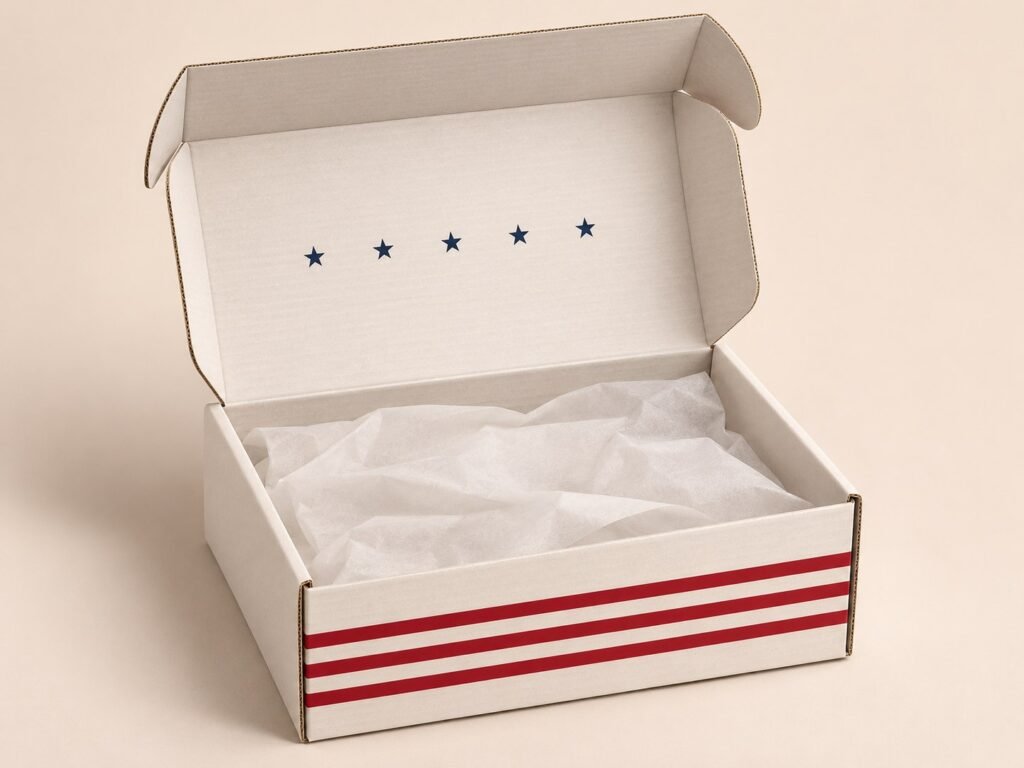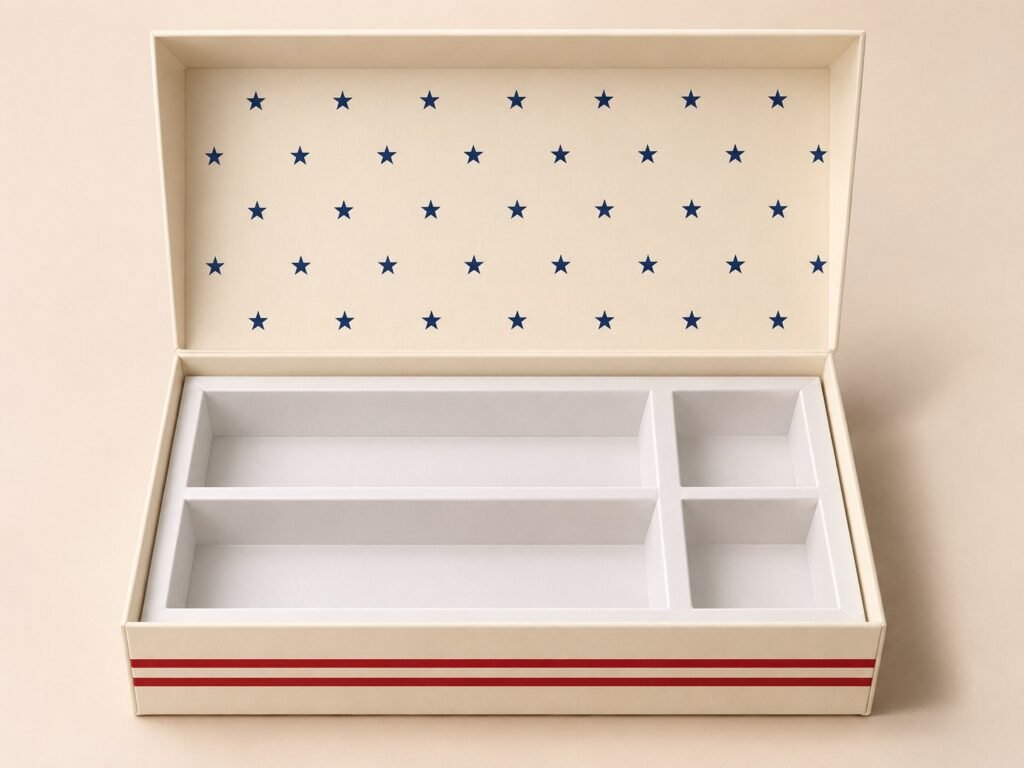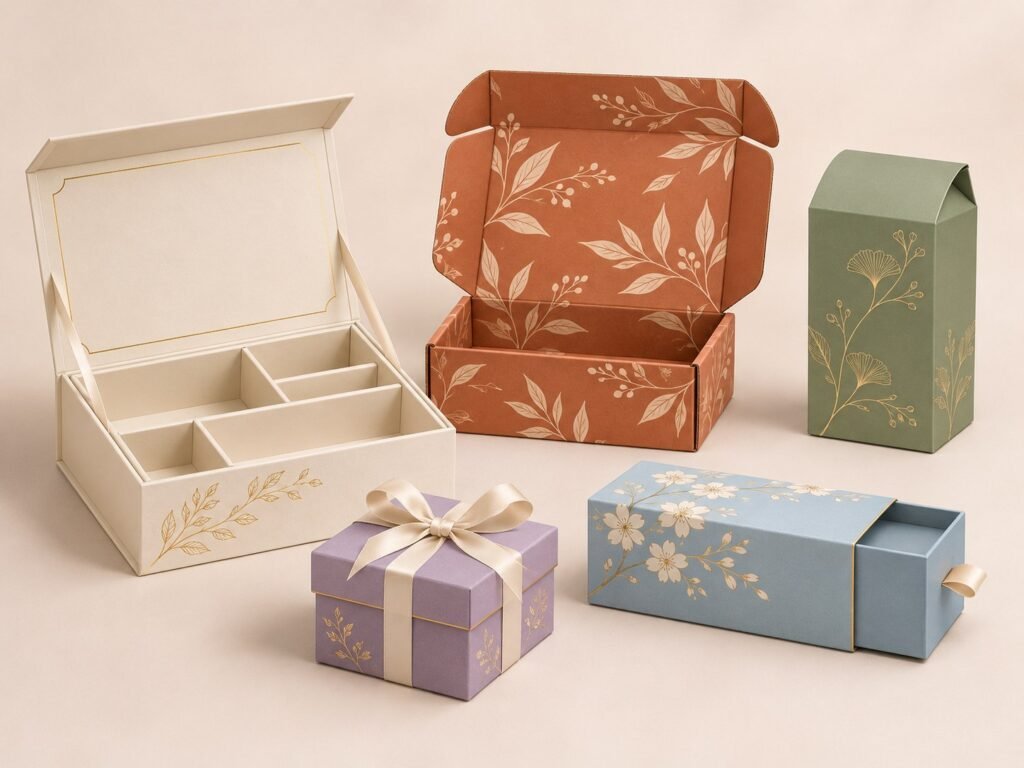
Illustrative packaging concept. Final structure and fit depend on the product.
In brief
Choose around the packed product, its weight, delivery route and presentation. Agree internal dimensions and check a physical sample before approving production.
What you will learn
- Compare common box structures and their limitations.
- Plan dimensions, inserts and delivery protection.
- Prepare the information needed for a useful quotation.
A box can look right in a photograph and still be wrong for the product. A bottle needs support at its base and neck; a gift set needs an arrangement that keeps its parts apart. Begin with the contents and the delivery route, then decide how the outside should look.
Start with the packed product
Measure the item in the condition in which it will be packed, including its cap, protective wrapping and any accessories. Record length, width, height and weight, with units. For a set, list each component and sketch the intended arrangement.
Identify what can move, scratch, leak or break. A snug fit alone does not prove that the packaging will protect the product. The structure, support and delivery conditions all need to be considered.
Compare box structures
The following options are starting points rather than guarantees of suitability. Board grade, construction and the packed weight can change the decision.
| Structure | Useful starting point | What to check |
|---|---|---|
| Mailer | Online orders and subscription packs | Closure, board strength, cushioning and courier handling. |
| Folding carton | Retail products and lightweight presentation | Product weight, panel strength and any outer shipping protection. |
| Rigid presentation box | Gift sets and presentation-led collections | Insert support, packed size and a suitable delivery outer. |
A presentation box is not automatically a parcel-ready shipping box. If it will travel through a courier network, discuss the complete pack, including the shipping outer and any cushioning.
Plan size and inserts
Distinguish internal usable dimensions from external dimensions. The internal space determines whether the contents fit; the external size affects storage and delivery. Ask the supplier to state which measurement is being quoted.
There is no single allowance that suits every product. Board thickness, wrapping, packing method and insert construction affect the space required. For multiple items, leave room for the divider itself and make sure products can be removed without damage.
For example, a bottle and a printed card need more planning than their combined widths. A divider may separate them, while a finger notch or opening gives the buyer a way to lift the card.
Review artwork on the actual structure
Use the agreed dieline for artwork preparation. Check which surfaces will be visible when the box is closed and opened, and keep important text away from cuts, folds and joining areas as instructed by the supplier.
A screen preview helps review placement, but it cannot establish the final feel, fit or exact appearance of a physical finish. Ask what type of proof or sample is available and what it can confirm.
Check the complete pack before ordering
Use the actual product or a representative sample to check loading, closure and removal. Make sure accessories stay in place and the pack can be assembled consistently. For delivery packaging, agree an appropriate assessment of the packed product under expected handling conditions.
Keep a record of the approved dimensions, board specification, artwork version and sample decisions. Changes to an item or insert after approval may require the box to be checked again.
Prepare your quotation brief
- Product dimensions, packed weight and a photograph or arrangement sketch.
- Quantity per box style and artwork version.
- Required print areas and any matching inserts, labels, notes or sleeves.
- Delivery destination and the date the finished packaging is needed.
- Sampling, proofing and shipping requirements.
If you do not know the right structure, say so. Clear product information is more useful than selecting a box style without knowing whether it fits the job.
Key takeaways
- Choose the structure around product fit and handling before artwork.
- Confirm whether dimensions are internal or external.
- Approve a complete specification and suitable sample, rather than relying on a picture.
Frequently asked questions
Should I measure the product or an existing box?
Measure the packed product first. If you also provide an existing box, state whether its dimensions are internal or external and explain what you want to retain or change.
Does a gift box need an outer shipping carton?
It may do. Presentation and transit protection serve different purposes. Discuss the product weight, fragility and delivery route so the complete pack can be assessed.
Can different artwork versions use one box structure?
They can share a structure when the product fit and construction remain suitable. Provide the quantity for each version and have the artwork and production requirements confirmed.